
New Jersey Slip & Fall Lawyer
Were you injured in a slip and fall accident in New Jersey?
At the Law Offices of David A. DiBrigida, we provide slip and fall representation on a contingency basis, with no attorney fees unless we recover compensation for you.
If you fell and cannot say precisely what you slipped on, an insurer will treat that uncertainty as the end of the matter. It is not, though it does determine what has to be established first. The substance or defect that caused the fall must be identified, and identifying it after the fact depends on evidence that is cleaned away within the hour. Pursuing that evidence quickly is the first thing a New Jersey slip and fall lawyer does. Contact us for a free consultation.
Slip and Fall Lawyer New Jersey
No injury kills more New Jersey residents over 65 than a fall does, according to state fall data from the Department of Health. Falls also account for roughly 14 percent of the state’s unintentional injury deaths, of which there were nearly 5,000 in 2023.
A slip and fall lawyer in New Jersey establishes what caused a fall and who was responsible for allowing it. Those are separate questions, and the first governs the second. A claim that begins with a wet floor requires evidence of what the hazard was, how it arrived, and how long it sat there. A claim that begins with a broken step requires evidence of the defect and of the inspections that should have caught it. Without an identified cause, there is nothing to attach responsibility to.
Types of Slip and Fall Cases We Handle in New Jersey
Fall claims are organized by the condition that caused the fall, because the condition determines what evidence exists and who is answerable for it.
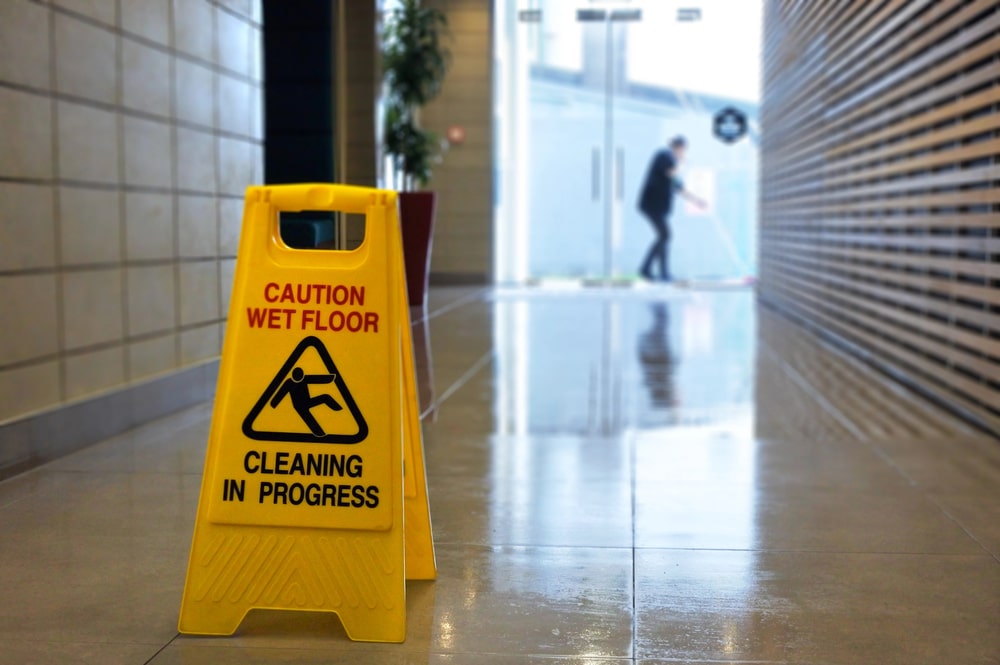
- Wet and slippery floors. Spills, tracked-in water, and recently mopped surfaces cause the largest share of falls in retail and hospitality settings. Warning cones and cleaning schedules become central to the claim.
- Snow and ice accidents. Untreated exterior walkways and lots injure people all winter, and a removal contractor may hold the obligation the owner failed to perform.
- Uneven and defective flooring. Torn carpet, lifted tile, and unmarked changes in level create hazards that a property has usually known about for some time.
- Stairway falls. Loose treads, absent handrails, and inconsistent riser heights produce falls that carry farther and cause greater harm than a level-surface fall does.
- Inadequate lighting. A hazard that would be obvious in daylight becomes invisible in a dim stairwell or parking structure, and the lighting itself becomes the defect.
- Obstructed walkways. Merchandise, cords, and delivery pallets left in aisles injure people who had no reason to expect them.
- Falls from height. Loading docks, unguarded platforms, and open floor openings produce injuries at the severe end of the range.
- Premises liability. Falls form one part of a broader body of property claims, and the same questions of control and notice govern all of them.
- Brain injuries. A fall that causes the head to strike a hard surface causes trauma, and the effects on memory and concentration frequently appear days afterward.
- Spine injuries. A landing on the base of the spine transmits force through the vertebrae, and the resulting damage governs whether physical work remains possible.
- Catastrophic injuries. Hip fractures in older adults carry consequences reaching well beyond the orthopedic injury itself.
- Wrongful death. Where a fall causes a death, the resulting claims are brought by the estate alongside those of the family who depended on the person.
Why Choose the Law Offices of David A. DiBrigida as My Slip and Fall Lawyer in New Jersey?
Identifying What Caused the Fall
Most people who fall cannot describe the cause, and that is not evidence of anything except how quickly a fall happens. What fills the gap is surveillance footage, the incident report a business generated, statements from the employee who cleaned the area afterward, and the maintenance record for that location. All of it exists at the time of the fall and much of it does not survive a month. Fall claims are handled by David A. DiBrigida, who has appeared for injured New Jersey residents since 1992. Moving on that evidence promptly is what a personal injury lawyer in New Jersey contributes at the beginning of a case, and it frequently determines whether there is a case at all. There are sound reasons hiring counsel matters in these claims, and this is the principal one.
Every file this office opens is brought for the injured person and against the business or the insurer. Claims that require litigation are conducted by trial counsel with our continued involvement.
Settlements Following Operative Treatment
Surgery changes what a fall claim is worth, and the range below reflects that. Each is drawn from the millions of dollars recovered on behalf of clients here:
- $1,200,000, for a retired man whose injuries as a pedestrian required an operation
- $250,000, where a back injury sustained aboard a bus could not be treated conservatively
- $90,000, after a damaged knee was repaired arthroscopically
- $35,000, reached in eight months for persistent neck and back pain
Nothing is charged to look at a fall claim, and our fee is contingent on the outcome.
What Is Important to Understand About a Slip and Fall Case?
Damages, Liability, and Compensation for Slip and Fall Cases
A business or property owner owes reasonable care to those lawfully on the premises, and a fall claim asks whether that care was exercised with respect to the particular condition that caused the injury. Should an insurer contend that the person who fell bears some responsibility, that contention is resolved under N.J.S.A. 2A:15-5.1, reproduced by the State Library, which ends a claim only where the injured person’s share exceeds everyone else’s combined. Arguments about footwear, distraction, and whether a hazard was open and obvious are made to reduce an award rather than to defeat it. How a matter is categorized once filed is set out in the Judiciary’s civil court materials.
A fall claim ordinarily recovers:
- Emergency and surgical treatment. Imaging, operative repair, implanted hardware, and the inpatient rehabilitation that follows a serious fall.
- Income lost during recovery. Wages missed while unable to work, together with any lasting reduction in earning capacity.
- Pain and permanent limitation. A fall commonly leaves lasting restriction on movement and ends activities a person previously managed unaided.
- Continuing care. Physical therapy, home assistance, and the mobility support that older adults frequently require after a hip fracture.
What Are Important Aspects of a Slip and Fall Case?
Four elements decide these claims, and each of them is easier to secure in the first week than at any point afterward.
- Surveillance footage. Most commercial premises record the area where a fall occurs, and most systems overwrite footage within two to four weeks unless a written demand reaches the business first.
- The incident report. A business completes one as a matter of policy, and it fixes the date and location while recording what staff said at the time.
- Evidence of how long the condition existed. Inspection logs, cleaning schedules, and prior complaints establish whether the hazard could have been discovered. Determining fall liability rests almost entirely on this question.
- Prompt medical attention. Back and neck injuries frequently present late, and delayed back symptoms give an insurer grounds to attribute them to something else.
What Is the Slip and Fall Case Timeline?
The investigative work in a fall claim is urgent while the valuation is not; most clients expect the reverse.
- Preservation demands. Written notice reaches the business within days, directing that footage and records be retained before any system overwrites them.
- Review of the footage. Where video exists, it usually settles the cause of the fall and how long the hazard had been present.
- Course of treatment. A demand cannot be framed until the physicians have identified what will not improve.
- Submission of the demand. Everything gathered goes to the insurer as a single package with our valuation attached.
- Resolution. Offers move back and forth over several rounds before a release brings the claim to an end.
What Should You Bring to Your Slip and Fall Consultation?
Anything captured at the scene carries disproportionate weight, and whatever you have is enough to begin.
- Any image of the floor, stairway, or condition that caused the fall
- A copy of the incident report, or the name of the manager who took it
- Details for any witness, including staff who came to help
- Whatever your treating providers have sent you so far
Suit must be brought within two years under N.J.S.A. 2A:14-2, with much shorter notice periods applying to property maintained by a public entity.
Expect the conversation to focus on the moments before the fall, since establishing the cause is what makes everything else possible. The question of how health insurance fits in is worth raising at that first meeting, since unpaid balances accumulate while a claim is pending.
Most Dangerous Locations for Slip and Fall Accidents in New Jersey
Falls concentrate where surfaces change condition frequently and where the people crossing them are unfamiliar with the layout.
Retail and hospitality settings producing the most claims include:
- Grocery stores and produce sections. Water misting, dropped produce, and freezer condensation keep these floors wet throughout the day.
- Restaurant dining rooms and service corridors. Staff move between the kitchen and the floor continuously, carrying liquid with them.
- Hotel lobbies and pool surrounds. Guests cross wet tile in unsuitable footwear at all hours.
- Big-box retail entrances. Weather is tracked across the threshold faster than any cleaning schedule accounts for.
Transit and institutional settings where falls occur include:
- Rail platforms and station stairways. Heavy passenger volume, worn treads, and people moving quickly to catch a train produce frequent falls.
- Hospital and clinic entrances. Patients with existing mobility limitations encounter polished floors and heavy doors.
- Municipal and county buildings. Stone entrances and interior stairs in older structures were built to standards long since revised.
Reach Out to the Law Offices of David A. DiBrigida to Schedule a Consultation
The sooner a fall claim reaches this office, the more of the evidence still exists to support it. A preservation demand sent within days of the fall frequently secures footage that would otherwise be gone by the time anyone thought to ask. The assessment carries no cost, and our fee arises only where the claim succeeds. Contact us to arrange that conversation.