
New Jersey Motorcycle Accident Lawyer
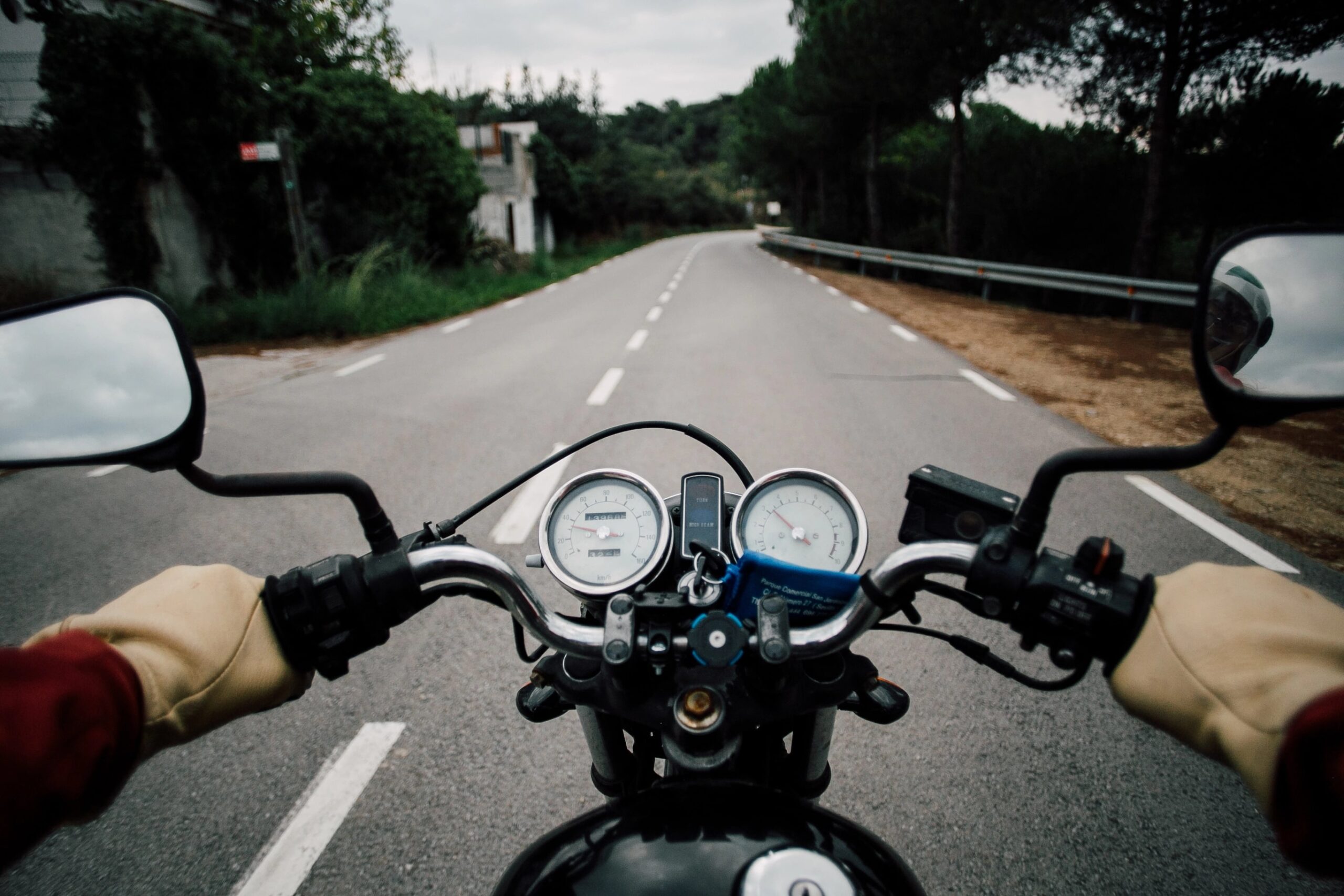
Were you injured in a motorcycle accident in New Jersey?
At the Law Offices of David A. DiBrigida, we are motorcycle accident lawyers who pursue full recovery for injured clients and their families.
When a driver turns across a motorcycle’s lane or pulls out from a side street, the resulting injuries can be substantially more serious than those from a similar impact in a passenger vehicle. At the same time, an insurance adjuster may have already formed an opinion about the rider’s conduct. Both the extent of the injuries and the question of fault need to be addressed together. Our founder has represented injured people against insurance companies since 1992, and a New Jersey motorcycle accident lawyer at our office can document the medical picture and the liability picture together. Contact us for a free case review.
Motorcycle Accident Lawyer New Jersey
 Motorcyclist fatalities in New Jersey fell from 120 in 2024 to 72 in 2025, a decline of roughly 40 percent and the largest year-over-year drop of any road user group in the state, according to statewide fatality reporting. The exposure that produces those numbers has not changed.
A motorcycle accident lawyer in New Jersey represents injured riders and their passengers in claims against the drivers and insurers responsible for a crash. Two features separate this work from an ordinary car accident claim. The injuries are more severe, because a rider has no structure absorbing the impact and no restraint holding them in place. And the claim arrives at an adjuster who often assumes the rider contributed to what happened. Both realities shape how the file gets built.

Types of Motorcycle Accident Cases We Handle in New Jersey
 The way a crash occurs usually determines what evidence matters and how hard fault will be contested. A left-turn collision at an intersection presents a different problem than a single-vehicle wreck caused by pavement failure. The matters below are the ones we handle for riders across the state.
-
Car accidents. A driver crossing the center line leaves a rider with no room and no time. These produce the most severe outcomes of any crash configuration and frequently involve impairment or inattention on the other driver’s part.
-
Rear-end accidents. A rider stopped at a light or slowing in traffic is struck from behind by a driver who did not register the smaller profile ahead. Following distance and phone records often become central.
-
Side-impact crashes. Left-turn and intersection collisions account for a large share of rider injuries, and the driver’s account is usually that the motorcycle appeared without warning. Sight-line evidence and signal timing address that claim directly.
-
Multi-vehicle accidents. Several carriers each work to place responsibility elsewhere, which slows resolution considerably. Establishing the sequence of contact determines how fault gets allocated.
-
Hit-and-run. When the driver leaves, recovery generally runs through the rider’s own coverage. Reporting the crash promptly is what keeps that route available.
-
Truck accidents. Blind spots on a commercial vehicle extend well beyond what a passenger car driver contends with, and the weight difference removes any margin. Preserving carrier records becomes urgent within days.
-
Impaired driving crashes. An impaired driver who strikes a rider faces a criminal matter and a civil claim on separate tracks. We handle the civil side while monitoring the criminal proceeding for useful findings.
-
Distracted driving accidents. A driver looking at a screen has no chance of seeing a motorcycle in time. Device records and vehicle infotainment data establish what was happening in the cab.
-
Single-vehicle accidents. Pavement defects, gravel, uncleared debris, and poorly marked work zones put riders down without any other vehicle involved. Responsibility may rest with a contractor or a public entity, and those claims carry their own notice requirements.
-
Passenger accidents. A passenger on a motorcycle is rarely assigned fault and may have a claim against either operator. These matters require care when the operator is a friend or family member.

Why Choose the Law Offices of David A. DiBrigida as My Motorcycle Accident Lawyer in New Jersey?
 Countering Assumptions Made About Riders
 Countering Assumptions Made About Riders
Rider claims arrive with a headwind that other injury claims do not carry. Adjusters raise speed before there is evidence of speed, raise protective gear before it is relevant to causation, and treat the choice to ride as though it were itself a form of carelessness. Answering those assumptions requires evidence gathered early rather than arguments offered late, which is where a personal injury lawyer in New Jersey can help. Rider matters at this firm are handled by David A. DiBrigida, who has represented injured people in this state since 1992.
This is a claims practice. We prepare the file, establish its value, and negotiate with the insurer, and matters that proceed to litigation are referred to trial counsel while we remain involved.
A Record of Substantial Client Recoveries
Thirty years of claims work has recovered millions of dollars for injured people across the state. Outcomes depend on the facts of each matter, and the recoveries below reflect the severity range these claims occupy:
-
Closed head injuries. A 76-year-old struck by a car recovered $1,450,000.
-
Shoulder and head injuries. A 30-year-old man struck by a hit-and-run driver recovered $500,000.
-
Knee injury requiring surgery. A man whose knee struck the dashboard in a rear-end collision recovered $90,000 after arthroscopic repair.
-
Fractured arm. A young woman injured when another driver ran a stop sign recovered $100,000 within four months.
A case review costs a rider nothing, and no fee is owed unless the claim produces a recovery.
What Is Important to Understand About a Motorcycle Accident Case?
Damages, Liability, and Compensation for Motorcycle Accident Cases
 Damages, Liability, and Compensation for Motorcycle Accident Cases
An injured person may recover where their own negligence was not greater than that of the party or parties from whom recovery is sought, with the award reduced by their percentage of fault, under N.J.S.A. 2A:15-5.1 as published through the New Jersey statutes database. Fault allocation carries unusual weight in rider claims, because the assumptions described above translate directly into a percentage. How you share fault is frequently the single largest variable in what a claim returns.
Coverage works differently for riders than for drivers, and the interaction between a motorcycle policy and PIP coverage is worth understanding before medical bills accumulate. Riders should also confirm what uninsured motorist coverage and underinsured motorist coverage their policy carries, since serious rider injuries routinely exceed a minimum liability policy.
Recoverable damages generally include:
-
Medical expenses. Trauma care, orthopedic surgery, implanted hardware, and the revision procedures physicians expect will follow.
-
Lost income and earning capacity. Time missed while recovering, plus the permanent gap where a rider cannot return to the same trade.
-
Pain and suffering. Physical pain, permanent limitation, and disfigurement, which appears in rider claims more often than in vehicle claims.
-
Traumatic brain injuries and spinal cord injuries. Outcomes carrying lifetime care costs that require careful projection.
-
Wrongful death claims. Losses belonging to the estate and to surviving family when a crash proves fatal.
What Are Important Aspects of a Motorcycle Accident Case?
A handful of factors determine outcomes more than anything else, and most are settled within the first weeks.
-
Independent evidence of how the crash happened. Where the only accounts are the rider’s and the driver’s, the driver’s version tends to be credited by default. Witnesses, video, and physical evidence break that tie.
-
Documented injury severity. Road rash, fractures, and internal trauma need to be photographed and recorded as they present, because appearance changes quickly.
-
Attention to delayed presentation. Head and spine injuries do not always announce themselves at the scene, and several delayed symptoms surface days afterward.
-
Roadway condition evidence. Where a defect contributed, its condition must be documented before repair. Claims involving road hazards turn on proof that is often paved over within weeks.
What Is the Motorcycle Accident Case Timeline?
Rider claims often run longer than vehicle claims because the injuries take longer to stabilize. Orthopedic hardware, revision surgery, and scarring all affect value, and none of them can be assessed early. The sequence generally looks like:
-
Investigation. The crash report, scene photographs, witness contacts, and available camera footage are gathered while they still exist.
-
Treatment. Valuation waits until physicians can describe permanent effects rather than projected ones.
-
Demand. A documented package of records, billing, wage proof, and valuation reaches the insurer.
-
Negotiation. Offers move across several rounds, and understanding how adjusters evaluate claims explains why the first number is rarely close.
-
Resolution. Signing a release ends the rider’s claim for good against everyone named in it.
What Should You Bring to Your Motorcycle Accident Consultation?
Whatever documentation you have on hand is sufficient for a first meeting, and most records can be obtained on your behalf.
-
Any report number, together with the department that responded
-
Photographs of the motorcycle, the other vehicle, the roadway, and your injuries
-
Treatment records and billing from every provider you have seen
-
Your motorcycle insurance declarations page, showing all coverages carried
-
Your riding gear, unwashed and unrepaired, along with any damage to it
Expect a conversation about how the crash occurred, what treatment has taken place, and what evidence still needs securing.
Most Dangerous Locations for Motorcycle Accidents in New Jersey
Rider exposure in New Jersey concentrates in two very different settings. Recreational routes through the northwest counties combine elevation changes with limited sight lines, while suburban arterials produce the intersection collisions that injure the most riders.
Riders encounter the most demanding conditions on these rural and recreational routes:
-
Route 23. A north-south route through Sussex and Passaic Counties with sustained grades and blind curves.
-
Route 15. Heavy seasonal recreational traffic through Morris and Sussex Counties.
-
Route 517. A winding two-lane route where sight distance closes quickly.
-
Route 519. A rural corridor with gravel intrusion and uneven shoulders.
A different set of hazards produces recurring rider collisions on the following suburban arterials:
-
Route 1. Constant turning movements across travel lanes into commercial frontage.
-
Route 22. Jughandles and closely spaced entrances that require abrupt lane changes.
-
Route 46. Older geometry carrying volumes it was never designed for.
Reach Out to the Law Offices of David A. DiBrigida to Schedule a Consultation
Reviewing a rider’s claim costs nothing, and no fee applies unless the claim produces a recovery. Contact us to arrange a consultation. We will go through how the crash happened, work out which policies respond, and tell you where the claim genuinely stands. Messages are returned quickly.
New Jersey Motorcycle Accident Infographic

Motorcycle Accident Statistics in New Jersey
 Riders represent a small fraction of registered vehicles and a disproportionate share of serious injuries. The state’s own safety materials describe motorcyclists as the most vulnerable group sharing New Jersey roads, and the national figures explain why that description holds.
Training is one of the few variables riders control. State safety materials note that the overwhelming majority of riders involved in crashes have had no formal training, which is part of why New Jersey funds a rider education program.
-
Motorcyclists are more than 28 times likelier than passenger car occupants to die in a crash and five times likelier to be injured, per state motorcycle safety materials.
-
A total of 6,228 motorcyclists were killed nationally in 2024, representing 16 percent of all traffic deaths, according to NHTSA motorcycle figures.
-
Thirty-seven percent of motorcycle riders involved in fatal crashes in 2024 were speeding, compared with 22 percent of passenger car drivers.
-
Sixty-five percent of motorcyclist deaths in 2024 occurred in multiple-vehicle crashes rather than single-vehicle wrecks, based on IIHS motorcycle data.
-
Motorcyclist deaths have risen 24 percent over the past decade even as the fatality rate per mile has moved differently, per National Safety Council analysis.
Broader research on rider risk factors is collected in federal motorcycle safety research, and New Jersey publishes course information through its rider training program.
What Are Common Types of Injuries in a Motorcycle Accident Case?
 The absence of an enclosure changes the injury profile entirely. A rider absorbs forces that a vehicle frame would otherwise distribute, and the resulting injuries drive both the medical course and the value of the claim.
-
Traumatic brain injury. Concussion and more serious brain trauma appear across the severity range, and deficits in memory, concentration, and mood sometimes emerge weeks into recovery.
-
Spinal cord injury. These injuries range from a herniated disc to a complete severing of the cord, and where a rider falls in that range determines lifetime care needs and earning capacity.
-
Road rash and degloving injuries. Abrasion from sliding across pavement can reach through skin into underlying tissue, often requiring grafting and leaving permanent scarring.
-
Fractures of the lower extremities. Tibia, fibula, femur, and ankle fractures are among the most frequent rider injuries, since the leg absorbs impact when a bike goes down.
-
Upper extremity and clavicle fractures. Riders instinctively extend an arm, producing wrist, forearm, and collarbone injuries that interfere with work for months.
-
Internal organ injuries. Blunt force to the abdomen and chest can damage organs without any external sign, which is one reason emergency evaluation matters regardless of how a rider feels.
-
Pelvic and hip injuries. These carry long recovery periods and frequently require hardware, affecting mobility permanently in more serious presentations.
-
Nerve damage. Brachial plexus injuries from shoulder impact can leave lasting weakness or loss of function in an arm.
-
Amputation. Crush injuries occasionally result in surgical or traumatic loss of a limb, which places a claim among catastrophic injuries requiring life-care planning.
-
Psychological injury. Post-traumatic symptoms after a serious wreck are documented and compensable where properly supported by treatment records.
New Jersey Motorcycle Accident Lawyer FAQs
How much does a motorcycle accident lawyer in New Jersey cost?
 How much does a motorcycle accident lawyer in New Jersey cost?
We work on contingency. The consultation is free, and no attorney fee is charged unless we recover compensation for you. The fee is a percentage of the recovery, agreed in writing before work begins. That arrangement exists so the decision to consult counsel does not depend on what a rider has available after a crash.
How long do I have to file a motorcycle accident claim?
New Jersey generally allows two years from the injury to bring a personal injury action under N.J.S.A. 2A:14-2. Where a public entity may answer for a roadway defect, notice obligations arrive far sooner than that. The practical deadline is earlier still, since scene evidence rarely survives a month.
Will the insurance company blame me for riding a motorcycle?
Expect the subject to come up. Adjusters raise speed, lane position, visibility, and gear routinely, often before any evidence supports the point. Those are negotiating positions rather than findings, and they are answered with witness accounts, scene evidence, and reconstruction where the facts warrant it.
What if the driver says they never saw me?
That statement appears in a large share of rider claims and is not a defense. A driver’s obligation to look does not disappear because a motorcycle presents a smaller profile. Sight-line analysis frequently shows the motorcycle was plainly visible.
What is my motorcycle accident claim worth?
It turns on how serious and how permanent the injury proves, what treatment has cost and will cost, earnings lost, how strong the liability proof is, and how much coverage exists. Scarring and permanent limitation move rider claims more than they move ordinary vehicle claims.
Does my own insurance cover my injuries?
Motorcycle policies in New Jersey are structured differently from standard auto policies, and what medical coverage a rider carries varies considerably between them. Reviewing the declarations page early tells you what is available before treatment decisions are made.
What if I was not wearing protective gear?
Gear is relevant only where it bears on causation of a particular injury, and carriers frequently stretch it well past that point. The question is what the evidence actually shows about the mechanism of each injury.
Can a passenger on a motorcycle bring a claim?
Almost always. Passengers are rarely assigned fault and may have a claim against the operator of either vehicle depending on how the crash occurred. The claim proceeds against an insurance policy rather than against a person.
What if the driver who hit me fled?
Recovery may run through your own coverage, and the principles that govern hit and run claims apply. Prompt reporting preserves that avenue, and camera footage along the route sometimes identifies the vehicle afterward.
What if a road defect caused my crash?
Claims against public entities and contractors are possible where a defect caused the wreck, and they carry notice requirements shorter than the general deadline. Documenting the defect before it is repaired is often the difference between a viable claim and no claim.
How long will my case take?
Clear liability with a resolved injury can close in a matter of months, and this office has settled matters in four and in eight. Surgical cases and disputed fault run past a year, because a permanent injury cannot be priced until physicians confirm it is permanent.
Do you handle claims involving trucks and commercial vehicles?
Yes. A rider struck by a tractor-trailer or delivery vehicle faces a carrier that investigates immediately, and those matters are handled alongside our other truck accident claims.
Important Resources for New Jersey Motorcycle Accident Cases
 What Are Important New Jersey Legal Resources for Motorcycle Accident Cases?
 What Are Important New Jersey Legal Resources for Motorcycle Accident Cases?
These sources let you read the governing law directly rather than rely on a summary.
-
Apportionment of fault, and how a claimant’s own share reduces an award, sits at N.J.S.A. 2A:15-5.1.
-
The two-year window for filing a personal injury action is set by N.J.S.A. 2A:14-2.
-
The New Jersey State Library maintains a keyword-searchable guide to the Legislature’s full-text statutes database.
-
Procedural material on how damages claims are categorized and filed is published by the New Jersey Judiciary.
-
Riders researching their own coverage should begin with the declarations page rather than a summary of general insurance rules.
What Are Important Local Resources for New Jersey Motorcycle Accident Cases?
Riders deal with these offices regularly after a crash. They appear here for convenience only, with no endorsement and no connection to this firm.
-
Motorcycle Safety Program, (609) 633-9308. The state office administering rider education and course provider information.
-
RWJUH Trauma Center, (732) 828-3000. One of three Level I trauma centers in New Jersey, serving the central region.
-
Motorcycle licensing services, (609) 292-6500. Titling, registration, and endorsement matters handled by the Motor Vehicle Commission.
About the Law Offices of David A. DiBrigida
David A. DiBrigida has represented injured people in New Jersey since 1992, and the firm takes only the plaintiff’s side of an injury matter. Recoveries have included $625,000 for a man who suffered internal organ injuries in a multiple-vehicle highway crash and $35,000 within eight months for a woman with neck and back pain after being rear-ended. Additional client reviews describe how those matters proceeded.
What Our Clients Say
⭐⭐⭐⭐⭐
“Mr. BiBrigida is a fighter, a relentless lawyer. I was in accident a little over a year ago, he took my case, and worked extremely hard for me. My case was settled in a short amount of time due to his diligence, hard work, and great work ethics, and I was awarded with a really nice settlement. I truly appreciate his hard work and professionalism, and I would gladly recommend him to anyone.”
Fresnel Cheridor
Read more reviews on our Google Business Profile.
Additional Resources for New Jersey Motorcycle Accident Cases
-
Best Motorcycle Roads in New Jersey
Contact the Law Offices of David A. DiBrigida
 A motorcycle accident attorney in New Jersey can take the insurer off a rider’s hands during recovery. The review costs nothing, the fee comes out of what we collect, and no attorney fee applies without a recovery. Expect questions about how the crash unfolded, what treatment you have had, and what the other driver’s insurer has already said. Contact us and you will get a candid read on the claim. Messages are answered quickly, with no obligation attached.