
Newark Slip And Fall Lawyer
Premises liability representation for people hurt by negligent property owners across Newark, NJ.
If you fell on someone else’s property in Newark because the owner failed to address a hazardous condition, the law puts the cost on them, not on you. Our Newark, NJ slip and fall lawyer has held property owners and their insurers accountable for injured visitors since 1992, in retail spaces, sidewalks, parking lots, and stairwells alike. Reach out for a free consultation and we will walk you through whether you have a claim worth pursuing.
Slip and Fall Lawyer Newark, NJ
A slip and fall claim is a personal injury case built on premises liability, the rule that a property owner owes safe conditions to people who visit lawfully. When an owner ignores a hazard or fails to fix one in a reasonable time, and that hazard injures a visitor, the law makes the owner answer for the consequences. The injuries are often more serious than people expect, since a fall can cause head trauma, broken hips, and torn shoulders, and a brain injury claim is one possible outcome in serious cases involving older clients or unprotected stairs.
Two things matter most in any fall case: the condition that caused the fall and what the owner knew or should have known about it. A puddle the manager walked past three times in two hours is a different case from one that formed seconds before the fall, and the difference can be the difference between a full recovery and a denial. Sorting out the notice question sits at the heart of any premises liability claim, and a Newark slip and fall attorney builds the case around exactly that issue from the first conversation.
Types of Slip and Fall Cases We Handle in Newark
Our office handles fall cases of every kind across Newark, in stores, sidewalks, apartments, parking areas, and stairwells. National Safety Council figures put falls among the leading causes of preventable death in public places, with around 15,000 such deaths in a recent year. The categories below come through our door most often:
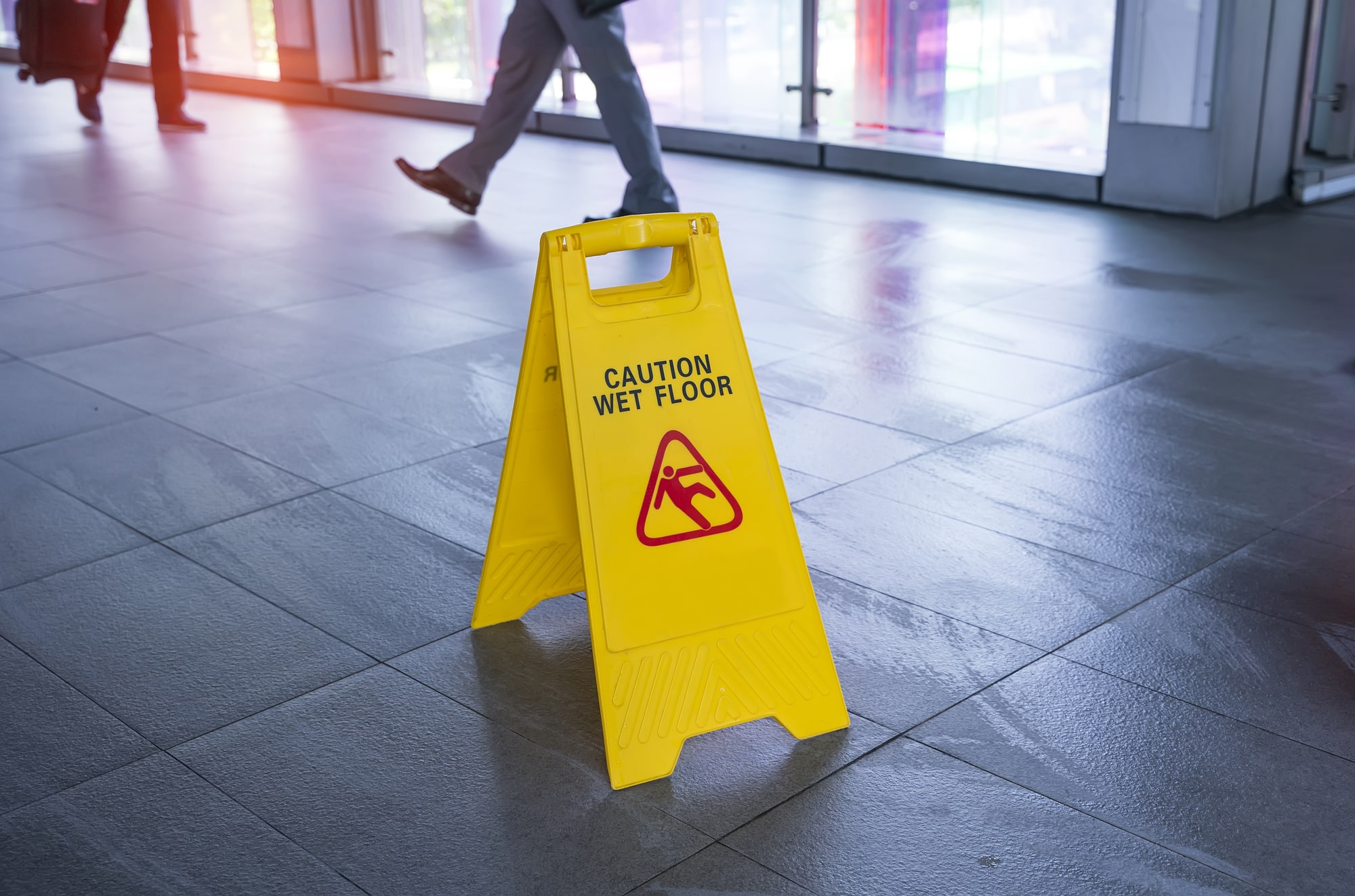
- Wet floors at stores and restaurants. A spill, a leak, or a freshly mopped surface without warning signs is a classic premises hazard. We trace what staff knew and when through schedules, video, and incident reports.
- Cracked or uneven sidewalks. New Jersey assigns sidewalk maintenance differently for residential and commercial properties, and we sort out who carried the duty before pressing the claim.
- Stairs and handrails. Loose treads, missing handrails, and poor lighting on stairs cause falls with severe outcomes, and code violations often line up with negligence in these cases.
- Parking lot hazards. Potholes, curbs, oil patches, and broken pavement send shoppers down hard, and the lot owner usually answers for the harm.
- Snow and ice. New Jersey winters bring untreated walkways and lots, and the question is whether the owner took reasonable steps to clear them within a reasonable time.
- Inadequate lighting. A poorly lit stairwell, hallway, or lot can convert an ordinary walk into a fall, and lighting choices tied to the property owner come into play.
- Falling objects. Items stacked too high or shelved poorly fall onto customers, and the store and at times the supplier are on the hook, particularly when the item carries a CPSC recall.
Newark Slip And Fall Infographic
Why Choose Law Offices of David A. DiBrigida as my Slip and Fall Lawyer in Newark, NJ?
Decades of Premises Liability Work in New Jersey
David A. DiBrigida has handled premises liability claims for injured people since 1992, and he runs the firm’s slip and fall work. Decades on the plaintiff side teach you how property owners and their carriers try to make a fall sound like the visitor’s mistake, and how to undo that with the facts. The Law Offices of David A. DiBrigida takes a fall case seriously when too many firms wave it off as a minor matter. When a claim has to be filed, we bring in trial counsel to take it through court.
Recovery for Injured Clients on a Contingency Fee
Our office has recovered millions of dollars for injured clients across New Jersey, fall victims among them. Every case is handled on contingency, so a fee is paid only out of a recovery and never up front. Beyond the fall claim itself, we also act as a personal injury lawyer in Newark, NJ in matters of other kinds for people hurt across the city.
What Is Important to Understand About a Slip and Fall Case?
Damages, Liability, and Compensation for Slip and Fall Cases
When an owner’s breach of duty of care causes an injury, the law lets you collect what the fall costs you. Fault is the hinge of the analysis, and a full demand usually reaches several kinds of loss:
- Hospital and rehabilitation bills for fractures, head trauma, and soft tissue damage
- Wages lost during recovery and reduced earning capacity if the injury limits your return to work
- The pain, daily limits, and the disruption a serious fall causes to your routine
- Property damaged in the fall, such as a phone, glasses, or work equipment
Negligence frames the analysis. An owner who lets a hazard sit, fails to inspect, or chooses not to warn has breached the duty to visitors. New Jersey follows modified comparative negligence, so a visitor partly at fault still recovers, with the award reduced by their share, while a visitor found more than half at fault recovers nothing. Carriers like to argue the visitor was not watching, so we anchor any partial fault question to where the hazard was, what light was on it, and what an ordinary person would have seen.
Newark Slip And Fall Infographic
What Are Important Aspects of a Slip and Fall Case?
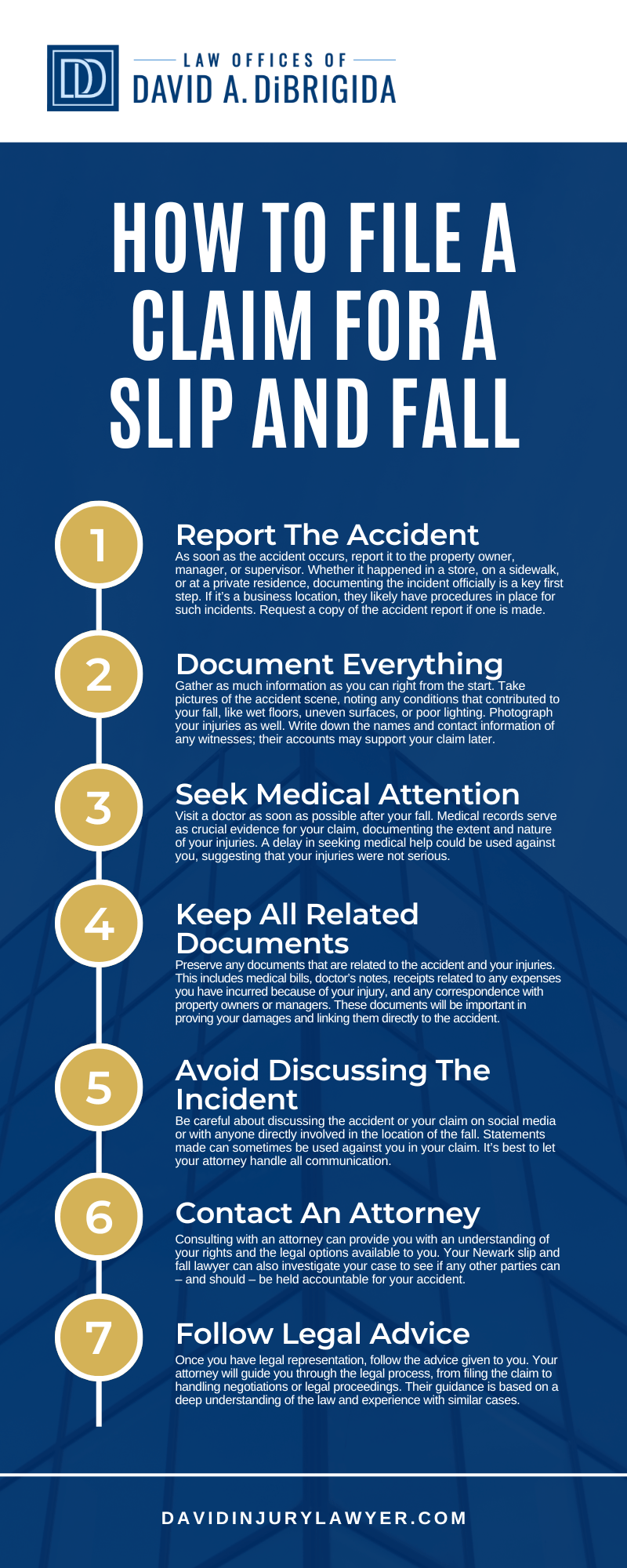
A fall case is built on evidence collected before the property owner has a chance to make the hazard disappear. The pieces that matter most include:
- The incident report you filed with the manager or owner
- Photos of the condition that caused the fall, taken before it is cleaned up
- Names of staff and witnesses who saw the fall or knew about the hazard
- Medical records connecting your injuries to the fall
Take photos before anyone cleans the spill or fixes the step, because that condition usually disappears within hours. Get medical care early and stay in care, since policy limits and skeptical adjusters both reward a tidy, prompt record.
What Is the Slip and Fall Case Timeline?
Each fall case keeps its own schedule, though most travel a familiar route:
- Medical care and investigation of the property in the weeks after the fall
- A demand to the owner’s insurer once your condition is stable
- Negotiation, where most claims are settled
- If the owner’s carrier will not pay fair value, the case is referred to trial counsel for filed litigation
- Depositions, document discovery, and any trial that follows, all carried by that counsel
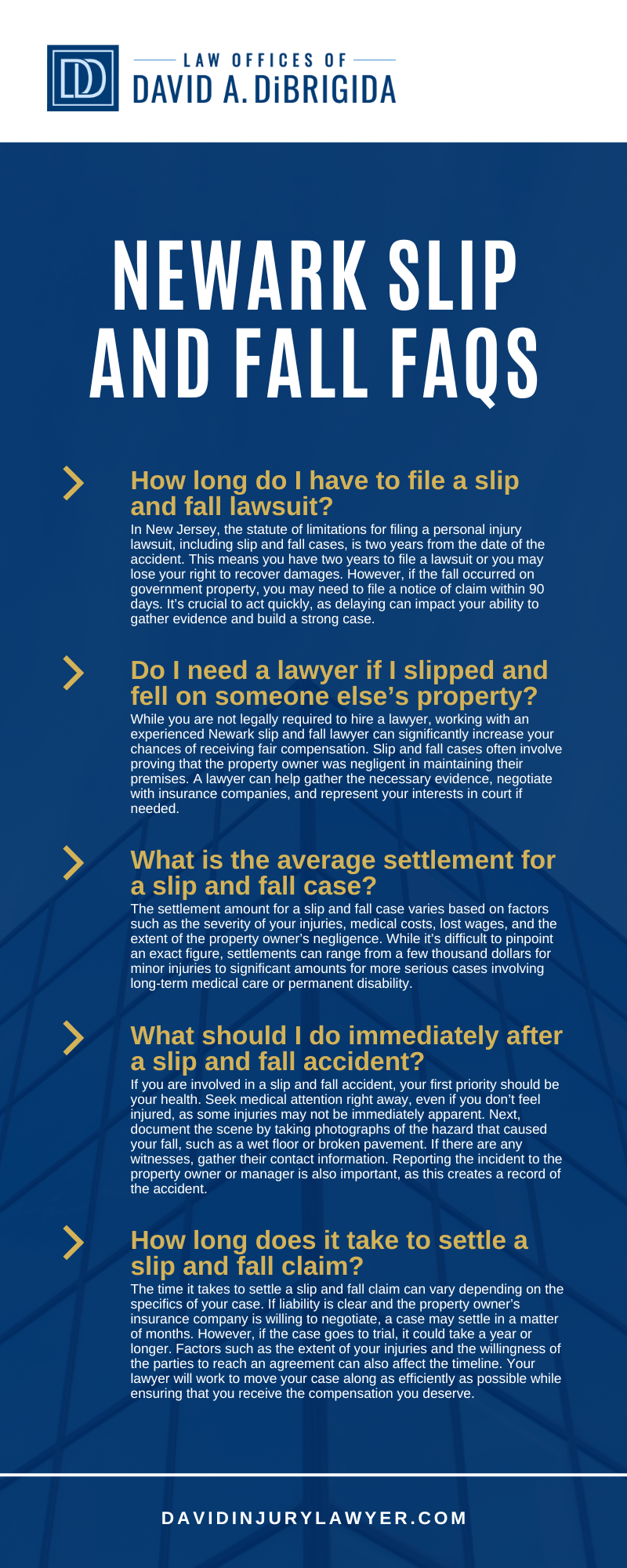
New Jersey’s statute of limitations generally allows two years from the fall to file suit, and the clock keeps running while you talk to the carrier.
What Should You Bring to Your Slip and Fall Consultation?
Bring what you have to the first meeting; even a partial file moves the case forward:
- Any incident or police report
- Photos of the condition that caused the fall and of your injuries
- Medical bills and treatment records
- Insurance details and the contact for the property owner or manager
The first visit is a conversation with no commitment. We will review what happened, answer your questions, and give you an honest read on the case.
What Are Important New Jersey Legal Resources for Slip and Fall Cases?
A few public sources lay out the framework behind a premises liability claim. Here is a short list of starting points:
- The New Jersey courts publish the standard two-year deadline that applies to most injury suits.
- New Jersey’s comparative negligence law sets how a visitor’s share of fault reduces, without automatically ending, a recovery.
- New Jersey’s damages law allows recovery for economic losses, like medical bills, and non-economic losses, like pain and suffering.
- The CDC falls research page reports that millions of older adults fall each year and tens of thousands die from those falls, and the same patterns reach younger people in unsafe places.
- New Jersey’s insurance department handles complaints about how carriers handle claims and explains coverage in plain terms.
Reading any of these will get you the lay of the land. The answer in your particular fall, of course, depends on what was on the floor and what the owner knew about it.
Reach Out to Law Offices of David A. DiBrigida to Schedule a Consultation
If a property owner’s neglect put you down, you have the right to know what your case is worth. Contact us for a free consultation with a Newark slip and fall lawyer who has handled these claims since 1992. There is no fee unless we win, and no pressure to commit anything during the call.